
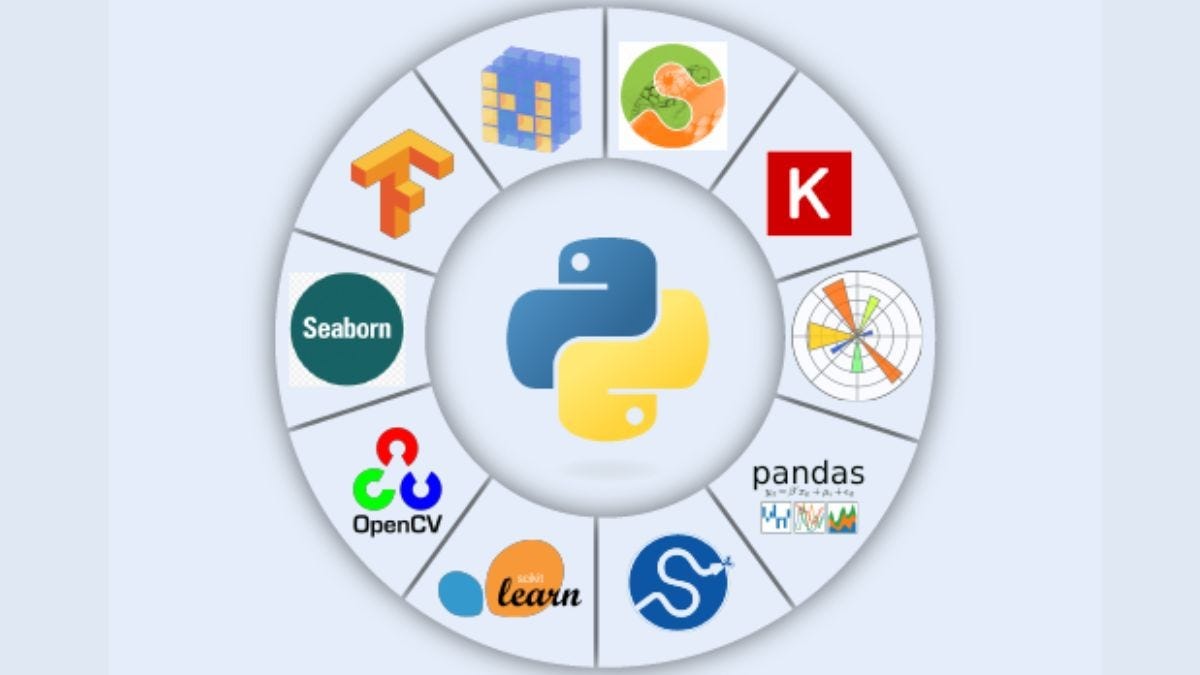
Beginnings matter less when code you can borrow sits nearby – libraries are exactly that, bundles of work already done so building things takes fewer steps.
From building websites to exploring data, tackling smart systems or streamlining tasks – Python’s tools smooth the path. Not every language adapts so well across such varied challenges.
Jump ahead – Python’s key tools shift by year. Picture what matters most now. These are the python libraries developers keep close in 2026. Each one fits a need, shows up often, works fast. Think beyond basics here. Some handle data, others shape visuals or speed testing. A few run silently behind apps you already use. Time reveals which ones stick around.
Table of Contents
NumPy
Whatever you do in math-heavy coding, chances are it involves NumPy. Built for crunching numbers, this tool handles lists of data, grids of values, along with calculations that tie them together.
NumPy key features
- Fast array processing
- Multi-dimensional arrays
- Mathematical functions
- Efficient memory usage
Most tools for data work begin with NumPy. It quietly supports much of what comes after.
Pandas
Pandas handles data tasks using tools built for organization. When dealing with rows and columns, it becomes useful through its design. Instead of starting from scratch, people rely on its structure to manage information similar to sheets. Working step by step, it supports handling details found in organized formats.
Pandas Key Features
- Data cleaning and filtering
- Handling CSV and Excel files
- Data analysis and transformation
- Easy data visualization support
Most folks working with numbers tend to reach for Pandas when tackling data tasks. Though it started small, now teams across fields rely on it regularly – its grip keeps growing.
Matplotlib
Picture drawing tools inside a computer program – Matplotlib works like that. It turns numbers into visuals, one plot at a time. Instead of rows of digits, you get lines, bars, or dots shaped into meaning. Think of it as translating spreadsheets into something eyes can follow easily. Each chart builds clarity, quietly showing patterns hidden in data. Not magic, just logic drawn out with precision.
You can create:
- Line graphs
- Bar charts
- Pie charts
- Histograms
Visual formats help show findings clearly once the data has been studied.
TensorFlow
Machine learning tools don’t get much stronger than TensorFlow. Its reach in artificial intelligence circles runs deep. Power comes through in how it handles complex computations. Many researchers lean on it when building intelligent systems. Strength lies not just in speed but flexibility too.
Google made it. This tool handles tasks like
- Neural networks
- Deep learning models
- AI-based applications
- Image and speech recognition
Most high-level artificial intelligence work runs on TensorFlow.
Scikit-learn
Built for tackling learning tasks, scikit-learn keeps things straightforward. Efficiency shows up in how it handles data without fuss. A tool that works well does not need flashy features – this one proves it.
It provides tools for:
- Classification
- Regression
- Clustering
- Model evaluation
For those just starting out, it shows up a lot in machine learning work. Its popularity comes from being straightforward to pick up.
Flask
A small tool made with Python helps create websites easily. It does not weigh down your project yet handles tasks well.
Key features:
- Simple and flexible
- Easy to learn
- Perfect when it comes to smaller or mid-sized websites
- REST API development
For those just starting out in building websites, Flask works well. Not too complex at first glance, it opens doors without confusion. A gentle entry point shows how things connect online. New learners find their footing here easily.
Django
A full-featured toolkit for building websites, Django comes ready with most tools you’d need. What sets it apart? It assumes common tasks and handles them upfront.
Key features:
- Built-in authentication system
- Admin panel
- Secure and scalable
- Fast development
Big sites choose Django because it handles heavy traffic well. Tech firms rely on its stability under pressure.
Requests
HTTP requests get sent using Requests, an uncomplicated tool. It handles communication needs without extra complexity.
For handling tasks like these:
- API integration
- Web scraping
- Fetching online data
Working with APIs becomes simpler because of it.
BeautifulSoup
Grabbing info from web pages? BeautifulSoup handles that task. It pulls out details people need, turning messy sites into clean results. This tool works quietly behind the scenes, making raw HTML easier to work with. Instead of wrestling code manually, it simplifies navigation through page structure.
Key features:
- HTML parsing
- Data extraction
- Easy navigation of web pages
Often found in efforts to gather information.
OpenCV
Picture analysis jobs often rely on OpenCV, a tool built for seeing and understanding visuals. While it handles camera inputs, its core job ties to breaking down images into usable data. A close look reveals how it supports machines in recognizing shapes or movement. Though open for anyone to tweak, developers lean on it heavily across robotics or surveillance work. Its structure allows quick testing when teaching systems to interpret scenes.
Found in these places:
- Face recognition
- Object detection
- Image processing
- Video analysis
Most folks working with machines tend to lean on OpenCV. It shows up a lot where smart systems need to see.
Python Libraries Matter
Packed tools tucked inside Python libraries cut down busywork. Without crafting every piece from scratch, coders tap into prebuilt parts to shape strong programs fast.
They also help you:
Increase productivity
Build real-world applications faster
Work on advanced technologies like AI and data science
Improve coding efficiency
Final Thoughts
It’s hard to ignore how much Python owes its fame to the tools people build with it. For anyone diving into coding – no matter their level – getting familiar with those tools opens doors they might not expect.
From NumPy and Pandas you begin, easing into tougher tools once familiar. Later comes TensorFlow, alongside Django, when comfort grows.
Getting good at these tools turns you into a solid, pro-level Python coder.
Also Check Python vs JavaScript – Comprehensive Guide – 2026