
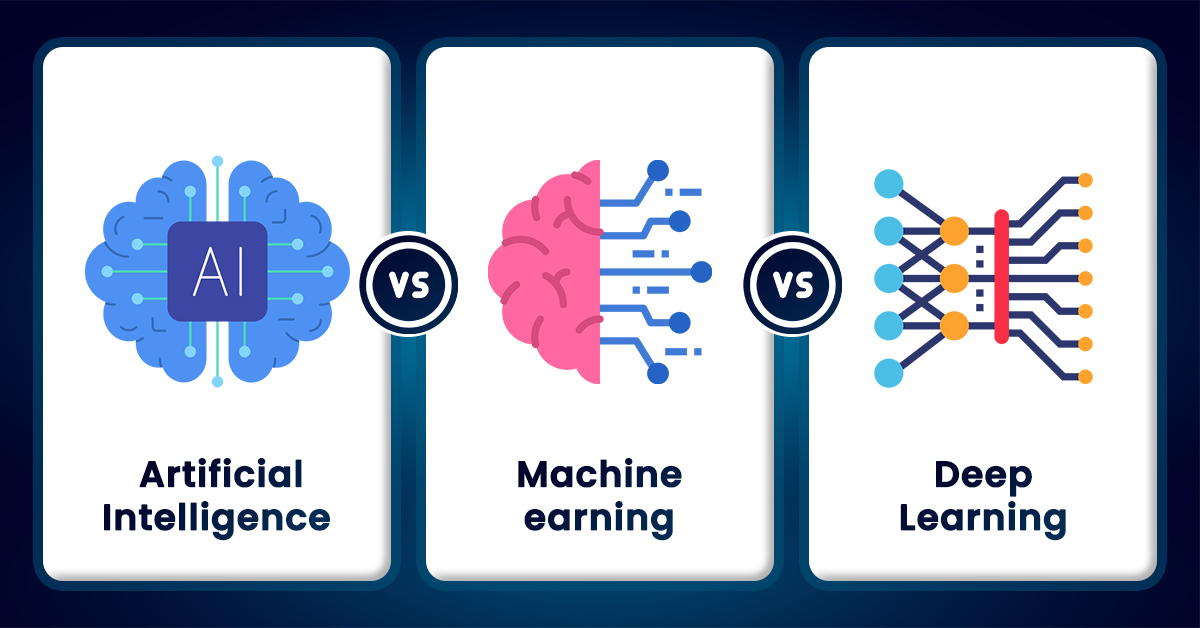
Though people toss these around at once, still each means something separate. One step further, every term points to its own layer inside that shared world of tech.
Picture this. A close look at AI, ML, and DL unfolds here – no jargon, just clarity. Think real-world use, not theory. Each idea links to the next, like steps on a path. The goal? Show how one grows from another. Not confusion, but connection. Details matter, yet simplicity leads. Industry examples guide the way. Understanding comes through context. One thing builds on what came before. Clarity arrives slowly, then all at once.
Understanding Artificial Intelligence?
Out of these ideas, artificial intelligence covers the most ground. Machines acting smart – that’s what it means when they do things people usually need brains for.
These tasks include:
- Decision-making
- Problem-solving
- Understanding language
- Recognizing images and patterns
Smart machines doing human-like tasks? That’s what AI explores. How they learn, decide, or respond – built to handle moments where thinking matters. Not magic, just code shaped to mimic understanding.
AI in everyday situations
Virtual assistants like Siri and Alexa
Google Search
Self-driving cars
Chatbots
Deep Learning sits within Machine Learning, which itself rests on the broader idea of AI. A kind of nesting happens here – each layer building quietly on what came before.
Machine Learning Basics?
Learning machines form part of artificial intelligence. These systems grow sharper by using examples instead of fixed rules. Performance climbs when they spot patterns in information fed to them. Improvement happens naturally, not through step-by-step coding.
Patterns come naturally to the machine when fed examples, skipping the need for handcrafted guidelines. Developers let go of rigid code by showing information instead.
Machine Learning How It Works
You provide data
The system learns patterns from the data
Whatever it does, guesses come out fast. Decisions pop up without asking twice
Machine Learning Example
- Email spam detection
- Recommendation systems (Netflix, YouTube)
- Fraud detection in banking
- Predicting house prices
Out of all the pieces tied to artificial intelligence, machine learning stands apart – seen daily in things people actually use. While AI paints a broad picture, this part does distinct work behind the scenes.
Deep Learning Explained?
Inside Deep Learning lives a method built on complex nets, these mimic how our brains work. These systems learn through layers, shaped much like neurons firing together. Instead of basic models, they rely on structures grown from tons of data. Their design pulls ideas directly from biology, yet operate inside machines.
Handling vast volumes of information comes naturally, while tackling intricate challenges happens without strain.
Deep Learning is especially powerful in areas like:
- Image recognition
- Speech recognition
- Natural language processing
- Autonomous driving
- Deep Learning Example
- Face recognition in smartphones
- Voice assistants understanding speech
- Self-driving car vision systems
- AI chat models
Starting off differently, deep learning needs greater amounts of data along with stronger computing resources when set beside regular machine learning methods. What stands out is how much more complex it becomes due to these demands, leaving simpler approaches behind in capability but also in ease of use.
AI ML and DL What Sets Them Apart
- Scope
AI is the broadest field
ML is a subset of AI
DL is a subset of ML - Learning Method
Some systems follow fixed instructions. Others learn by doing. One relies on clear directions. The other grows smarter through experience
ML learns from structured data
Deep learning picks up patterns by studying massive, intricate data sets - Data Requirement
AI can work with or without data
Patterns need examples to form. Learning happens when information repeats. Machines notice what people might miss. Experience shapes understanding here. Seeing many cases builds recognition. Details feed discovery over time
DL requires large amounts of data - Complexity
AI is the overall concept
ML is moderately complex
Most complicated thing here is DL - Hardware Requirement
AI can work on basic systems
ML needs moderate computing power
DL requires high-performance GPUs
How AI ML and DL Connect
You can understand their relationship like this:
AI is the main field
Inside AI Machine Learning
Deep Learning within Machine Learning
So every deep learning thing falls under machine learning. Yet machine learning itself sits inside artificial intelligence. Though plenty of AI stuff isn’t about machine learning at all.
Why These Differences Matter
Because knowing what sets them apart matters
Choosing the right way to learn becomes easier because of it. For those wondering where to go next, paths open up clearly within technology fields.
Understanding today’s tech becomes clearer through it. This way, insights grow without effort. A different view appears when using it regularly. Each part connects naturally over time. Learning happens quietly along the journey
When you face questions one on one, it makes things easier. Facing big tests? This comes in handy too.
Final Thoughts
Starting off, artificial intelligence covers the big picture. Instead, machine learning uses data to improve over time. On another level, deep learning tackles complex patterns through layered networks. Each plays a distinct role, yet they fit together like pieces of one system.
Right now, machines keep changing fast – knowing what sets them apart matters if you’re stepping into tech. Start at square one or aiming high in artificial intelligence? Either way, this background shapes how solid your base becomes.
Also Check Uses of Artificial Intelligence – Powerful Guide – 2026