
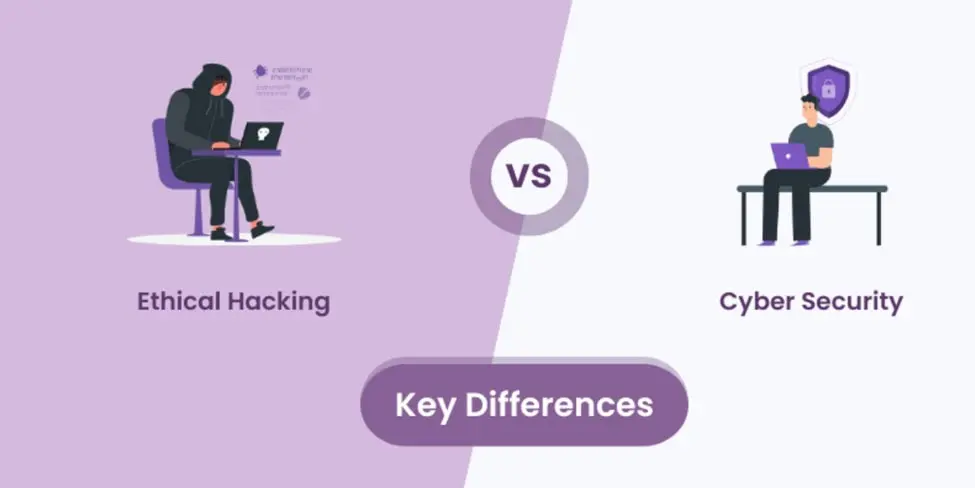
Confusion pops up a lot among new learners when it comes to telling ethical hacking apart from cyber security. Though linked tightly, even swapped around now and then, they aren’t identical twins. Spotting what sets them apart matters – more so when your goal involves working in this world.
This post breaks down each idea plainly. One follows the other, yet both stand apart. Their links show up quietly through examples. Choices in work life appear once differences sink in. A fit for you comes into view by the end.
Table of Contents
Understanding Cyber Security?
Most days, protection means stopping hackers before they get inside. When alarms go off, someone has to check fast – no delay allowed. Digital spaces need constant watching; eyes stay open even when things seem quiet. Locking doors matters just as much as chasing intruders afterward. Every file, every connection carries risk if left unguarded. Someone always tests the weak spots – it never stops.
Defense begins where risk ends – cyber security pros shape barriers before breaches happen. Guarding information doesn’t stop at firewalls; it grows through constant monitoring and smart access control. Systems stay resilient when protection blends into daily operations quietly. Threats shift often, so their work never settles into routine.
Protection comes first when talking about online safety. Defense follows close behind as a key part of staying secure. Keeping things safe happens through careful steps taken ahead of threats.
What Ethical Hacking Is?
Breaking into systems on purpose can actually be allowed. This kind of work falls under cyber security, but only when done right. A person does it to find weak spots before others do. The actions are planned, permitted, and never meant to cause harm.
Most people picture chaos when they imagine hacking – yet some turn that energy toward protection. These individuals borrow the mindset of criminals without sharing their intent. Problems get found because safeguards need stress tests. Weak spots surface during controlled probes, allowing repairs ahead of disaster.
Called penetration testing, this method shows firms the real strength of their security. When done right, it reveals weak spots others might miss.
Ethical Hacking vs Cyber Security
What sets them apart? One guards the gates, stopping threats before they get through. The other slips inside like an intruder – on purpose – to find weak spots first.
Starting off, cyber security covers plenty of jobs like watching threats, protecting networks, or designing safety systems. Meanwhile, ethical hackers dig into weak spots on purpose – just one piece inside that bigger world.
What sets them apart? The kind of tasks they handle. Watching over systems never stops for cyber security experts. Ethical hackers jump in now and then, searching for cracks during set checkups instead.
How They Work Together
These checks mean nothing without strong guards standing by. Protection grows stronger when scouts reveal hidden cracks. One group searches, another shields – both needed, neither replaceable.
Most times, a system’s weak spots stay hidden unless someone tests them on purpose. When defenses fall short, breaches happen fast – cyber security keeps that risk in check. One does not work without the other when it comes to staying protected.
Skills Needed Across Fields
Starting off, knowing your way around networks helps when it comes to cyber safety. Because without that base, guarding computers gets tricky. System defenses matter just as much, since weak setups invite trouble. On top of that, handling risks well means spotting danger before it strikes. Those who work here must stop attacks fast once they happen. Staying sharp about threats makes the difference between safe and sorry.
Hacking done right means seeing how break-ins happen from the inside. Not just knowing weak spots, but walking through them like someone who wants in. Tools matter, yet so does the way they are put together during tests that mimic real threats. Figuring things out on the fly becomes normal when you approach systems with curiosity first. To stay ahead, one must twist thinking sideways – like an intruder would – not simply follow steps.
Career Opportunities
Fine careers live in both areas, yet their duties tilt one way then another.
A person watching for threats might work as a security analyst, or perhaps step into engineering tasks later. One role checks weaknesses while another builds stronger walls against attacks. Protection happens through daily alerts plus fixing what breaks fast. Someone focused on networks keeps data moving safely without slowdowns.
Working in ethical hacking means doing jobs like penetration tester or ethical hacker. Not just checking systems – these people hunt down weak spots before others can exploit them. Their main task? Probing defenses thoroughly, uncovering flaws carefully.
Cybersecurity experts remain a top priority for businesses aiming to protect online assets. Firms now move fast to bring on talent capable of defending critical networks.
What career fits you?
Depending on what excites you more, one path might feel like a better fit than the other. Goals shape which direction makes sense down the road. Interest often decides where energy goes when learning begins.
Should guarding digital setups spark your interest, watching network traffic could feel like second nature. Because overseeing safety measures fits well, this field may suit your goals just fine. A wide mix of jobs appears here, sticking around for years ahead.
Final Thoughts
Curious minds who love untangling tough security puzzles often lean toward ethical hacking – it suits them well. Seeing problems through an intruder’s eyes becomes second nature in this role.
Most folks who work in tech begin with cyber security tasks before shifting toward ethical hacking over time. When skills grow, so does interest in testing systems legally. Some find their path changes after handling a few real-world threats. Experience often opens doors to more hands-on roles like probing networks for weaknesses. Moving forward usually means learning how defenses hold up under pressure.
Also Check Cyber Security Career Path – Powerful Guide – 2026